Treatment for Rare Pediatric Brain Tumors: The Tools Exist, but the System Struggles with Time and Bureaucracy

When a family receives a diagnosis of DIPG or DMG—rare and aggressive brainstem tumors—a race against time begins. Roughly 90% of children succumb to the disease within twelve months. There is currently no curative treatment, leaving clinical trials and experimental therapy as the only viable paths forward.

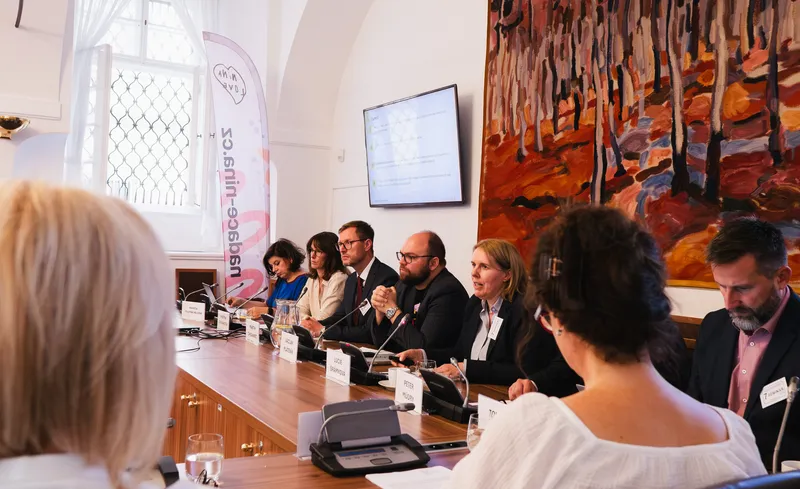
Systemic barriers to innovative treatment were the central focus of a roundtable discussion at the Chamber of Deputies on September 10, organized jointly by MP Václav Pláteník and the Nina Endowment Fund. The meeting brought together representatives from the Ministry of Health, the State Institute for Drug Control (SÚKL), health insurers, both national pediatric oncology centers (Motol University Hospital and Brno University Hospital), patient advocacy groups, and affected families

The Core Problem: Administrative Burden, Not Legal Gaps

The discussion made one thing clear: the legal tools to provide unapproved or innovative treatments in the Czech Republic already exist. We have specific treatment programs, the European S2 form for cross-border care, and exceptional reimbursement under Section 16.

The critical issue is that navigating these processes currently relies on the extraordinary personal drive of individual clinicians and families, rather than a predictable, streamlined system:

  • Clinicians sidelined by paperwork: Opening an academic study or organizing cross-border care requires tens of hours of administrative work, which physicians frequently handle outside working hours.
  • Section 16 used as a default workaround: The two pediatric oncology centers submit around 2,500 individual Section 16 reimbursement applications annually for just 400 patients. A framework meant strictly for exceptional cases has become a substitute for standard systemic pathways—often just to cover standard medications used for decades that lack Czech registration or specific indications.
  • Parents forced into coordination roles: A recent case where five children entered a clinical trial in Switzerland succeeded only because two parents handled translations, medical documentation, and outreach on their own. Access to life-saving care should not depend on personal initiative alone.

Concrete Next Steps

The goal of the meeting was not merely to catalog difficulties, but to identify actionable steps feasible within the next 12 to 24 months. Key takeaways and commitments include:

  1. Immediate action on pending access: SÚKL offered direct assistance in navigating delays for a specific treatment program involving a medication accessible to the Nina Endowment Fund through a French expanded access program.
  2. Dedicated clinical trial coordinators: While specialized centers receive funding via European Reference Networks (ERN) that covers administrative support, these funds must directly reach clinical departments to finance dedicated coordinators for clinical studies and cross-border care.
  3. Fast-tracking cross-border applications: Work is underway on a national annex to the European S2 form to establish an expedited track for urgent pediatric conditions, shortening the full timeline from initial clinical indication to approval.
  4. Legislative clarity for compassionate use: Ahead of the revised European pharmaceutical legislation, SÚKL proposes separating compassionate use from specific treatment programs, simplifying procedures and lifting unreasonable liability from prescribing physicians.
  5. A systemic pathway instead of repeated Section 16 claims: Developing predictable reimbursement models for repeatedly requested therapies will relieve clinical teams of thousands of administrative applications each year.

The roundtable was not a symbolic gesture, but the start of tangible operational follow-ups. For families facing rare pediatric diagnoses, removing administrative friction is a direct way to buy the one thing that matters most: time.

We value your privacy

This website uses cookies primarily for traffic analysis. Read more in our privacy policy.